Dialogues
with partners identified in Iran have focused on a ‘learning by doing’ project
aimed at reviving nomadic pastoralism and associated livelihoods
and agricultural biodiversity. The Centre for Sustainable
Development (CENESTA) is IIED’s project partner in
this endeavour.
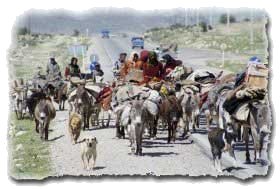
More than 90% of Iran’s surface is arid or semi-arid
land. Pastoral communities have always played an important
role in Iran and the greater ethno-ecological region of which
it is a part by developing creative and sustainable systems
for the use of scarce natural resources. Migration is a common
cornerstone of their strategies; their mobility ensures that
natural resources are not used to the point of exhaustion and
eventual extermination. Nomadic pastoralists have learned to
conserve rangelands through sophisticated techniques embedded
in complex social and cultural institutions.
Preserving, strengthening, and revitalising mobile nomadic
life in Iran and the greater geo-cultural region, with a
particular focus on achieving sustainable livelihoods, preserving
and revitalising its cultural strengths and models of conservation
and sustainable use of nature, is a social and ecological
necessity.
This project therefore aims to empower migratory nomadic pastoral communities
to identify the most appropriate models for sustaining livelihoods and agro-biodiversity,
taking into consideration their unique culture, present status, strengths and
limitations, sharing experiences and visions for the future.
The pilot
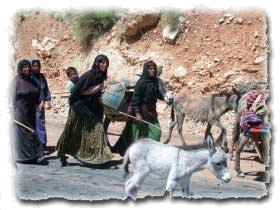
community of the project is the Kuhi Sub-tribe of “Shish Bayli” Qashqai
Nomadic Pastoralists of Iran. The Kuhi sub-tribe is among
the sub-tribes that
still continue their migratorylifestyle. The sub-tribe comprises
of 544 households with the population totalling 3,500 people.
In general, the migration of this group is limited to Firoozabad
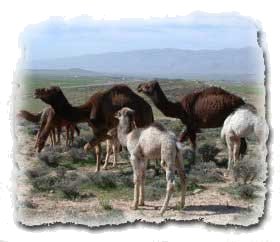
and Eqlid in Fars province, southern Iran. The livelihoods
of the Kuhi sub-tribe largely depend on livestock breeding
(sheep, goat, camel and other track animals).
Guiding Principles
These principles were discussed and formulated by the Council of Elders of
the 14 clans of the Kuhi sub-tribe of the Qashqai Confederation of Tribes
during a recent workshop with support from the partner organisation CENESTA:
Equity and justice
- Benefit
to the entire community;
- Priority
will be given to the weaker and more deprived parts of
the community;
Participation
- Consultation
with the various camps of the clans and taking into account
their views, if possible
before taking any decisions;
- Reporting
on performance, decisions, actions, and the results to
every single camp
as soon as possible;
Accountability
- All
the actors should be accountable to each other;
- Transparency
in planning, design and implementation;
Sustainability
- Economic
and financial (using the income -rather than the capital-
of economic activities and producing
wealth and not just income);
- Social
and cultural (developments should emerge from their own
culture and not blindly
imitating models from other countries and conditions);
- Environmental
and ecological (using environmentally appropriate technology,
conserving nature and prevention of pollution);
- Legal,
policy, structural and institutional (support from both
government
and national and international organisations and ensuring
that the community-based organisations are modelled after the traditional social
organisation of the
tribe);
More
information on the activities of the project partner; the
Iranian non governmental organisation CENESTA, can be
found at: http://www.cenesta.org/
|